

If you’ve ever spent Sunday night staring at a blank meal plan and thinking, “I’ll just figure it out tomorrow,” you’re not alone. Most people don’t fail at healthy eating because they’re lazy or unmotivated. They fail because the system they’re using to plan meals is too fragile for real life.
The good news: you don’t need a perfect system. You just need one that can survive busy days, cravings, surprises, and low-energy weeks. Let’s break down why meal planning often falls apart—and how to fix it in a way that actually sticks.
Why Meal Planning Feels So Hard (It’s Not Just You)
On paper, meal planning sounds simple: pick some recipes, make a list, shop once, and follow the plan. In real life, it bumps into work, kids, stress, fatigue, social plans, and the days when you just don’t want what you wrote on the calendar.
When that happens, most people assume they “don’t have discipline.” In reality, they just built a plan that didn’t leave any room for being human.
4 Common Reasons Meal Planning Fails
- Decision fatigue. If you’re deciding what to eat at 5:30 p.m. every day, you’re already tired from a full day of decisions. That’s when takeout, random snacking, or skipping meals tends to win.
- Overcomplicated recipes. When every meal has 14 ingredients and three pans, it looks great on paper and terrible on a Wednesday night. Complexity quietly kills consistency.
- No backup plan. Most plans assume nothing will go wrong. Then a meeting runs late, you forget to defrost chicken, or you’re just not in the mood for what you scheduled. With no “Plan B,” the whole week can slide.
- Trying to be perfect. The minute something goes off-plan—a snack, an unplanned meal out—many people feel like they “ruined” the week and stop trying. Perfection is the fastest road to giving up.
A Simpler Meal-Planning Framework That Actually Works
Instead of aiming for the “perfect” plan, aim for a plan that’s lightweight, repeatable, and flexible. Here’s a simple framework you can start using this week.
1. Decide your structure once per week
Start by choosing a basic structure instead of writing out 21 separate meals. For example:
- Breakfast: high-protein rotation (2–3 options)
- Lunch: leftovers or fast meal-prep options
- Dinner: 3–4 anchor meals you repeat and rotate
You’re not trying to create a restaurant menu—you’re building a repeatable base that makes most days automatic.
2. Keep dinners anchored and flexible
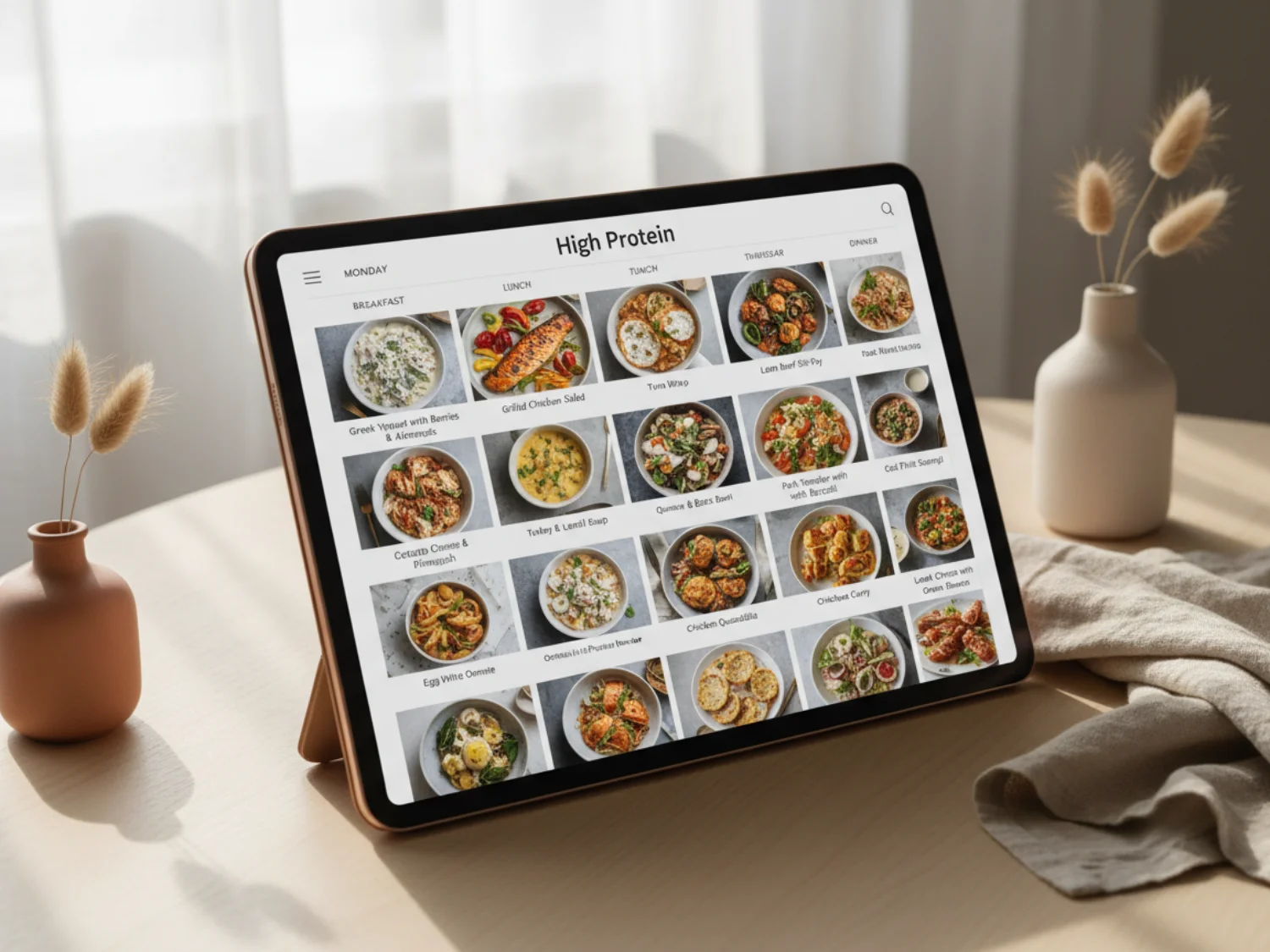
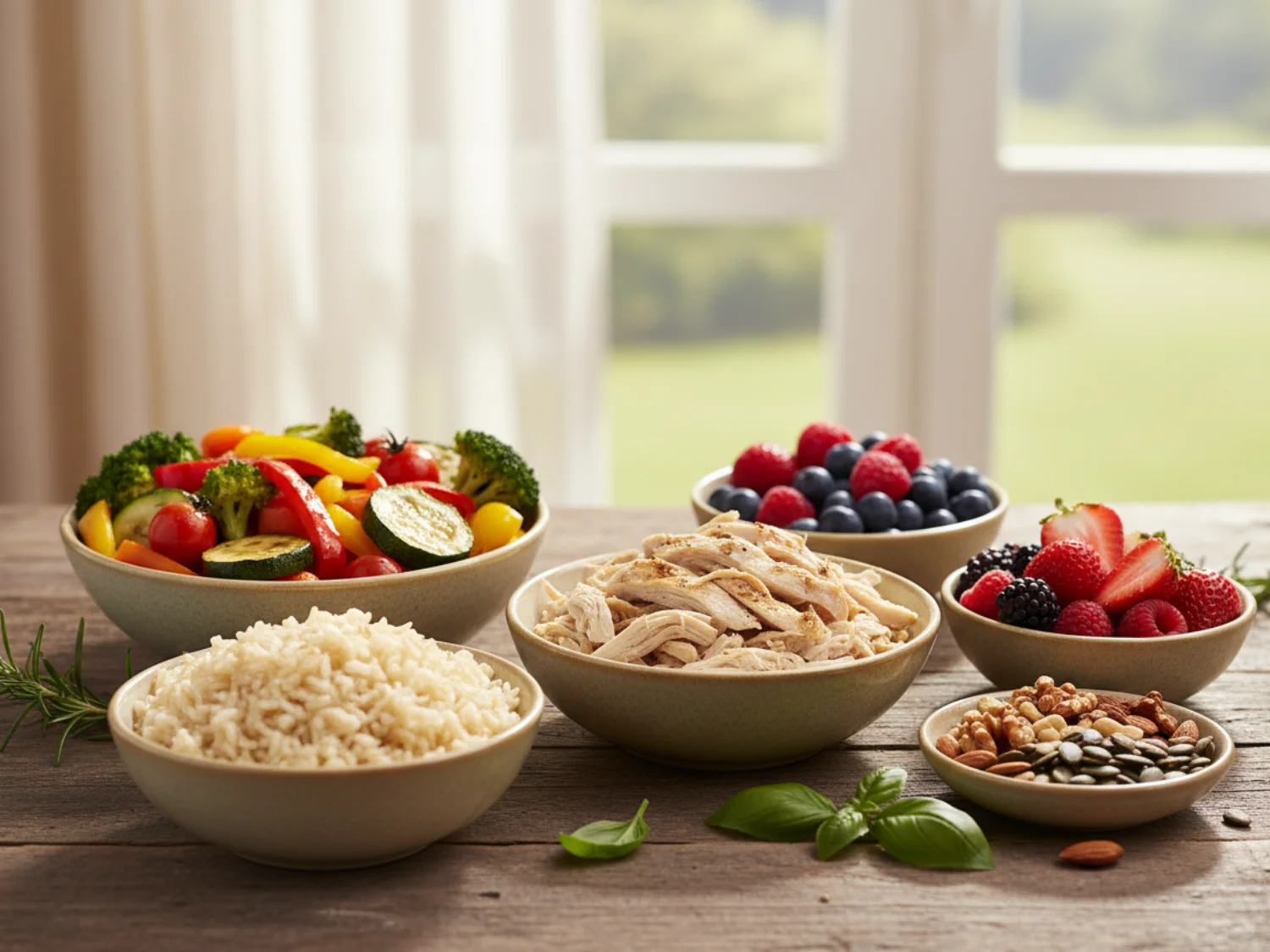
Pick three or four anchor dinners that you know you’ll actually make. Think: sheet pan meals, skillet recipes, or simple high-protein bowls. Then give yourself permission to swap them around during the week as your schedule changes.
Your calendar might say “High-protein chicken bowl” on Tuesday, but if Wednesday is easier, swap them. The success is in following the structure, not the exact day.
3. Pre-decide your “backup” options
Life will happen. Build that into the plan by choosing one or two quick backups you can rely on when things go sideways—like a frozen high-protein option, a simple eggs-and-toast combo, or a go-to order from a nearby spot that still fits your goals.
With a backup ready, a chaotic day doesn’t have to become a chaotic week.
4. Focus on protein and patterns, not perfection
The most important part of a meal plan isn’t perfection—it’s your pattern. Are you generally hitting your protein target? Are you choosing meals that keep you full and energized? Are you making it easy to repeat another good week?
When you miss, adjust the next meal instead of restarting “next Monday.” That one mindset shift alone can change your entire relationship with food.
How an AI Meal Planner Fits Into All of This
Doing all of this by hand—finding recipes, checking macros, tracking trends, and adjusting when life happens—takes time. That’s where an AI meal planner can support the framework you just read, instead of replacing your common sense.
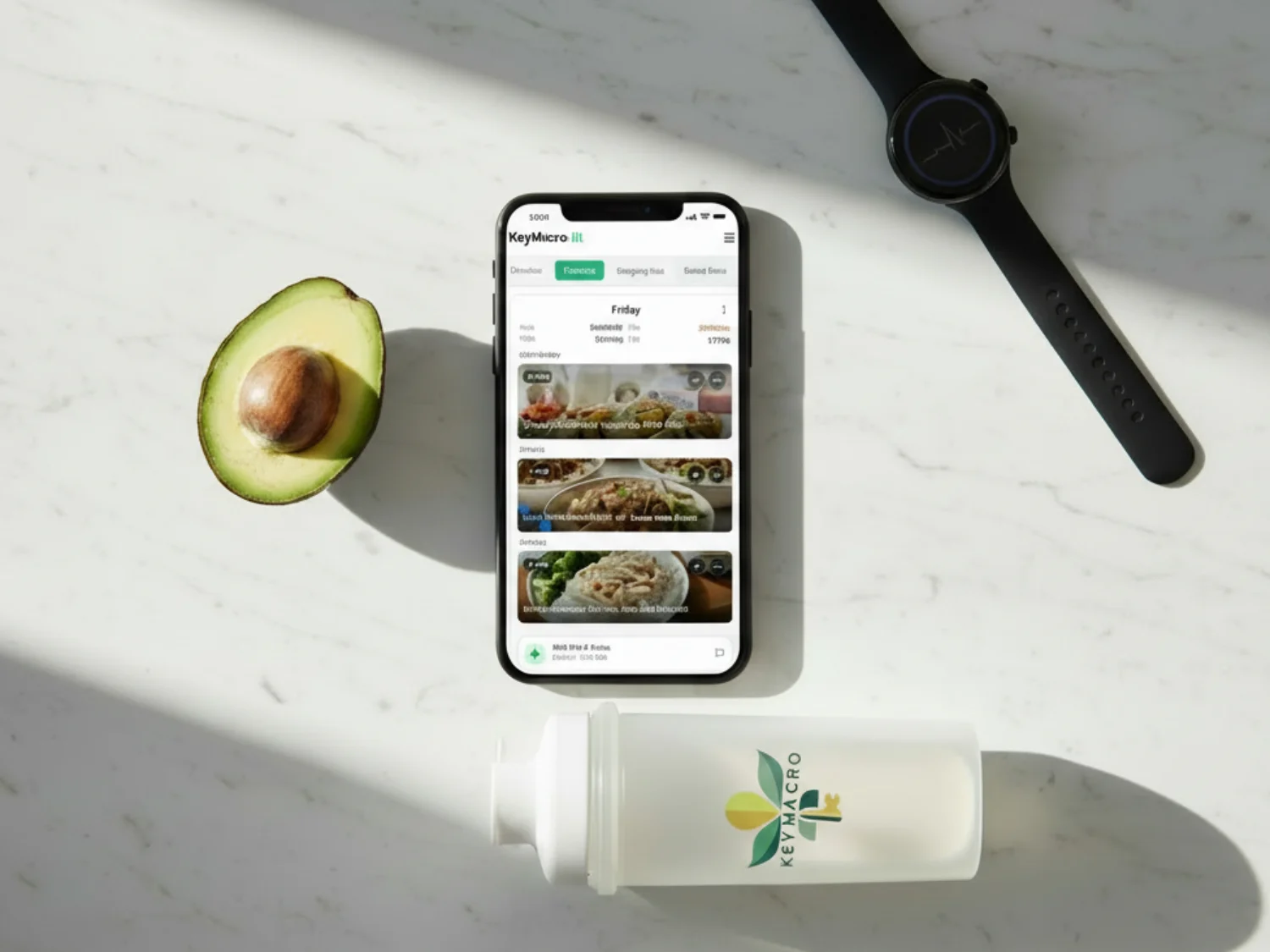
KeyMacro is built around that idea. Instead of giving you another rigid plan, it helps you:
- Generate a full high-protein weekly plan in seconds based on your goals.
- Use the Recipe Hub to filter meals by protein, cook time, cuisine, or dietary needs.
- Save Favorites so your go-to meals are always ready to drop into your week.
- Swap any meal instantly when your schedule or cravings change.
- Add your own recipes so your personal staples live in the same system.
- Track trends over time in the My Journey Hub so you can see what’s actually working.
Bringing It All Together
If meal planning has failed you in the past, it doesn’t mean you’re bad at planning. It usually just means the system you were using wasn’t built for real life—no flexibility, no backups, and no support when things went off-script.
Start by simplifying your structure, choosing realistic meals, and focusing on patterns instead of perfection. Then, when you’re ready, let tools like KeyMacro handle the heavy lifting so you can put more energy into living your life, not managing your food.
Ready to turn what you just learned into a plan you can follow?
KeyMacro creates simple, high-protein weekly meal plans in seconds — no tracking, no overwhelm, no complicated decisions.
Start your first plan today.